How Many Countries Demand Health Insurance Before Entry?
No matter how long you travel abroad for, ensuring you have suitable health insurance is always worth considering. It’ll help you avoid costly medical fees and give you added peace of mind that you are in the best hands should something unfortunate happen. However, with some countries, international health insurance isn’t optional, it’s mandatory.
At the time of writing more than 40 countries require you to have a valid health insurance policy in place before you enter. This includes the Schengen area of Europe (comprising 29 countries). What is worth noting is that some countries (Schengen included) only require health insurance for stays that exceed a certain period or where visitors are from a country that has no dual healthcare agreement with another.
In this blog, we’ll assume you are heading to the country for a long-term stay, and there is no agreement between your home nation and the one you are travelling to.
Will travel insurance be enough to gain me entry into a country?
That depends on how long you plan to stay. Holidays, city breaks, and even periods of work can all be sufficiently covered by expat travel insurance, but once your stay exceeds a set period (90 days in many cases, but can be significantly less), you’ll likely require a visa and appropriate international health insurance to be allowed to remain in the country.
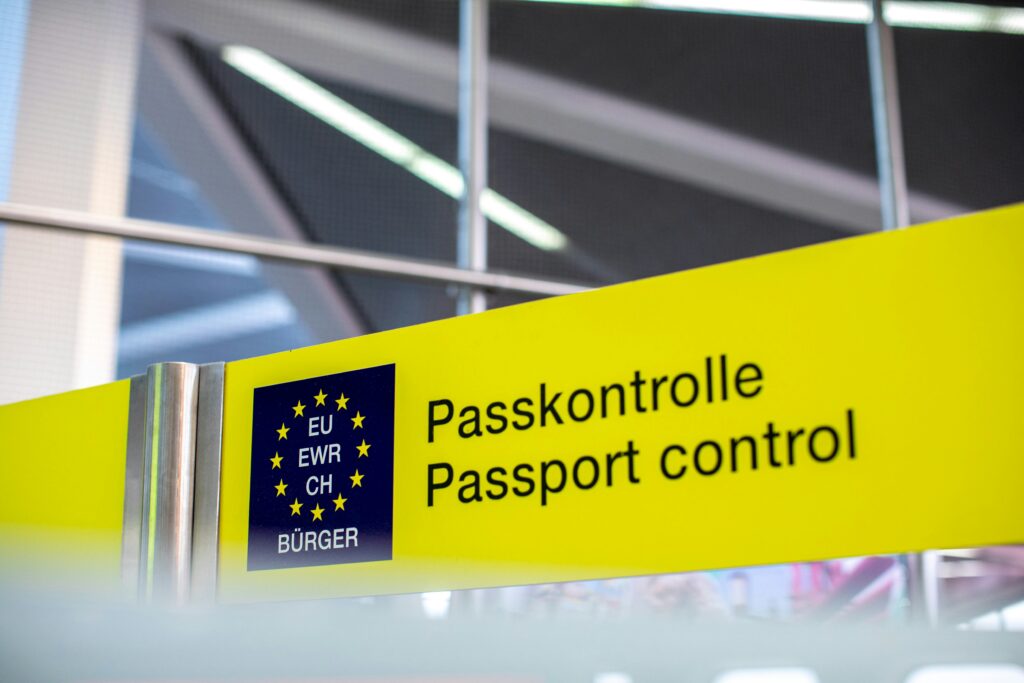
Regardless of your length of stay, some countries will request proof of insurance, whether comprehensive health insurance or a more simplified travel insurance policy, upon entry. Failing to have either could result in you being turned away at the border or even at airport check-in.
Which countries require health insurance for entry?
At the last count, there were just over 40 countries that required proof of insurance before granting entry. This could change as governments refine or introduce policies, so it is always advisable to contact the relevant embassy before travel for the latest updates.
Schengen area countries
The Schengen Area comprises 29 European countries. Rules on visas and health insurance depend on a traveller’s nationality and length of stay.
Non-EU citizens staying for up to 90 days within any 180 days may need a Schengen visa, depending on their nationality. Those who require a Schengen visa must have travel health insurance with a minimum coverage of €30,000, including emergency medical care and repatriation. Visa-free non-EU citizens do not need a Schengen visa for short stays but may still be asked to show proof of health insurance.
Stays longer than 90 days are not covered by the Schengen rules. Non-EU citizens must apply for a national long-stay visa or residence permit from the destination country, which usually requires proof of health insurance.
EU/EEA and Swiss citizens do not need a visa to enter or live in another Schengen country. For short, temporary stays, they are covered by the European Health Insurance Card (EHIC). For stays longer than 90 days, they must register locally and have health coverage through the host country’s health system or equivalent comprehensive insurance.
The countries included are: Austria, Belgium, Bulgaria, Croatia, the Czech Rep, Denmark, Estonia, Finland, France, Germany, Greece, Hungary, Iceland, Italy, Latvia, Liechtenstein, Lithuania, Luxembourg, Malta, the Netherlands, Norway, Poland, Portugal, Romania, Slovakia, Slovenia, Spain, Sweden and Switzerland.
Argentina
A mandatory travel insurance rule is in place for entry to Argentina. All visitors must carry a plan with coverage for emergency medical care, hospitalisation, medical transport, repatriation and 24/7 assistance.
Costa Rica
Costa Rica has relaxed rules regarding health insurance requirements, and for short stays, it isn’t always required; however, depending on the length of travel or the type of visa required, it could be mandatory.
Cuba
Cuba requires all visitors to have health insurance before arrival. It won’t need to be shown until you are in the country, but it is an essential part of the entry requirements. If travelling from certain parts of Africa or Central and South America, proof of certain vaccinations may also be required.
Cuba is very strict on this, but unlike some countries, it also presents you with an alternative if you are not sufficiently covered. The nation’s government-backed health insurance will be required and will be your only way to gain entry if you haven’t secured a policy before your arrival.
Georgia
From January 2026, all foreign visitors to Georgia must have a valid travel health & accident insurance policy in place for the duration of their stay. This will be inspected at the border, so it cannot be ignored. The coverage must include GEL 5,000 for outpatient care and GEL 30,000 for inpatient services. As we write this, in late 2025, health insurance isn’t yet mandatory, but border officials have begun requesting proof of insurance from visitors.
Iran
Iran does not currently have any reciprocal healthcare insurance agreements with other countries. As a result, most nationalities must prove they have valid health insurance to obtain an Iranian visa. The policy will need to demonstrate that medical costs, emergency care and repatriation are covered for the duration of the stay.
Jordan
All international visitors to Jordan are expected to have health insurance without exception. Failing to do so could result in being refused entry to the country.
Moldova
In Moldova, if you are planning to stay for more than 90 days, you’ll need to prove you have valid health insurance. The requirements are much the same as those found in Schengen countries. The policy must have at least €30,000 cover, and include repatriation, emergency treatment and emergency hospital stays. If you hold a North American or European passport, there isn’t a formal requirement to present proof of insurance at the border; however, it is still recommended that a suitable policy be in place in case anything changes.
Panama
Panama doesn’t require health insurance for those visiting as tourists, but digital nomads or those holding special visas are required to hold suitable health insurance before entering the country.
Qatar
Qatar has mandatory health insurance in place, and for visitors or expats, this means that stays exceeding thirty days must be accompanied by a private medical insurance plan. You’ll need proof of your coverage to be granted a visa or have a visa extended, and you may be asked to show confirmation of your policy at passport control.
Tanzania
Travel insurance is now mandatory in Tanzania for international visitors. Announced in the 2025/26 national budget, this mandate states that all travellers must purchase insurance that will cover them for up to 92 days at $44 from ZIC. This will cover medical emergencies, medical repatriation and travel-related accidents.
Uruguay
Uruguay, like many other countries, shifted its stance on insurance requirements for visitors, and post-COVID-19, it implemented new rules. As of 2023, all foreign visitors must have a comprehensive medical insurance policy before entering the country.
UAE
For entry to the United Arab Emirates, health insurance is required for a visa to be issued. If your passport allows visa-free entry to the UAE, you aren’t required to have health insurance, but it is highly recommended, as non-citizens are ineligible for free medical care.
Other countries or areas that require you to have a valid health insurance policy include Bhutan, Laos, Myanmar, Rwanda and the Galapagos Islands. Rules can change fast, especially during a health outbreak or conflict. Full guidance should always be taken from the relevant embassy.
If the country I am moving to doesn’t require me to have health insurance, should I still get it?
Yes. It is certainly advisable. Moving to a new country or spending a lot of time in one can be stressful. Navigating how to register for healthcare, settling into a new job and acclimatising to a different culture can all take time. With a healthcare insurance policy in place before you leave, you can remain safe in the knowledge that should medical help be required, it’s not only easily accessible, but affordable too.
Why are more countries requesting health insurance upon entry?
There are many reasons, but perhaps the two largest are COVID-19 and the strain that tourism or long-term visitors may be putting upon the healthcare system. Governments were absorbing the costs of treating uninsured people, and this was causing the wider society to suffer. Tens of thousands of pounds, dollars or euros would be spent on emergency evacuations, complex surgery or long-term hospital stays, and governments were picking up the cost. By requesting health insurance for those visiting, more money can be channelled into supporting residents.