10 of the Strangest Traditions from Around the World (2026 Update)
From scrambled egg festivals to organised food fights, many cultures mark the calendar in ways that can feel surprising, amusing, or downright baffling to outsiders. These traditions are often rooted in centuries of history, local beliefs, and community spirit, and they’re very much alive and celebrated today.
Here’s a list of just 10 of the most bizarre cultural practices from around the globe that are still carried out today. If you’re travelling or living abroad to experience cultures like these first-hand, don’t forget to invest in international health insurance to keep you protected. We also offer a number of other expat insurance products to support you wherever you’re living in the world, including a cashless health insurance option to make accessing healthcare overseas simpler and less stressful.
Throwing tomatoes in Spain
First up is La Tomatina, the largest food fight in the world. The annual festival is held in Buñol, Spain, on the last Wednesday of August as part of a week-long celebration, and sees thousands of people taking to the streets to pelt over-ripe tomatoes at each other just for fun.
It’s not quite known how it came about, but there are many ideas about its origins. One of the most popular theories is that during a parade of Gigantes y Cabezudos (Giants and Big-Heads) in 1945, one of the participants’ Big Heads fell off during the festivities. The participant then got angry and started hitting things, including a market stall of vegetables. More people then joined in, pelting each other with tomatoes until the local police broke up the fight.
The following year, there was a pre-planned food fight where a few participants bought their own tomatoes. Again, the local forces broke up the fight but the next year, thousands of people turned up to have a tomato fight.
Today, La Tomatina is a fully organised international event that attracts visitors from around the world who want to take part in this messy tradition, with tonnes of tomatoes, safety rules in place, and a celebratory atmosphere that’s a far cry from it’s more chaotic beginnings. With the potential for a tomato in the eye, it might be a good idea to explore health insurance in Spain so you can avoid any costly medical expenses!
Smashing coconuts on people’s heads in India
Breaking coconuts on people’s heads is a ritual that has been around for a long time in some parts of southern India. It’s part of the Aadi Perukku festival celebrated every Monsoon in the state of Tamil Nadu. Aadi Perukku itself is a festival for giving thanks that honours water, fertility, and prosperity, with an array of rituals taking place at temples and along riverbanks.
During certain temple ceremonies, devotees to the Hindu religion will gather inside the temple and kneel, and the Priest will break a coconut on their heads as a sign to the gods that they are asking for good health and success. Whilst the ritual can appear extreme, the participants prepare for it, and it’s carried out in a controlled way, with devotees typically rising and continuing their prayers after as part of the wider celebration. Participation is entirely voluntary, and many people attend the festival without taking part in this specific ritual.
There are various origin stories for this tradition. One story says that devotees to Lord Shiva were trying to communicate with him to get his help. After trying everything to get him to appear, they resorted to breaking coconuts on their heads, as coconuts resemble the three-eyed face of Lord Shiva. Lord Shiva then appeared and gave the devotees his help, and the tradition has continued.
Another possible origin story stems from colonial times. During British rule, the British were set on demolishing the temple in order to build a railway line. The British said that if the local people could break coconut-sized stones with their heads, they would not demolish the temple. The people succeeded, and the temple remains in place to this day.
Festival of scrambled eggs in Bosnia
Whereas in the UK we might celebrate the start of Spring by picking some daffodils or doing a spring clean, in Zenica, Bosnia, they mark the start of the season with an unusual tribute to scrambled eggs known as the Čimburijada festival. The tradition symbolises renewal, community, and the shared hope for a prosperous year ahead after winter.
The day begins with a large communal breakfast of eggs cooked in a city park near the Bosna River. Around 1,500 of eggs are cooked at the same time in giant pans and then distributed to the festival attendees. From there, celebrations continue with music, barbecuing and jumping into the river for swimming, turning the even into a lively, open-air welcome to Spring.
Throwing cinnamon at single 25-year-olds in Denmark
In Denmark, there’s a quirky tradition for those who reach 25 and are still single – friend and family will cover them in a cloud of cinnamon. The exact origins of this aren’t clear, but it’s often linked to when spice merchants would travel the country and sometimes remain lifelong bachelors.
The ritual is not a form of punishment but more just an excuse to be silly with friends and family. Firstly, the birthday person gets splashed with water and then they get covered from head to toe in cinnamon. When people turn 30 and are still single, the cinnamon gets replaced with pepper, and sometimes has egg in the mix to help the mixture stick to the person.
Chasing away winter in Hungary
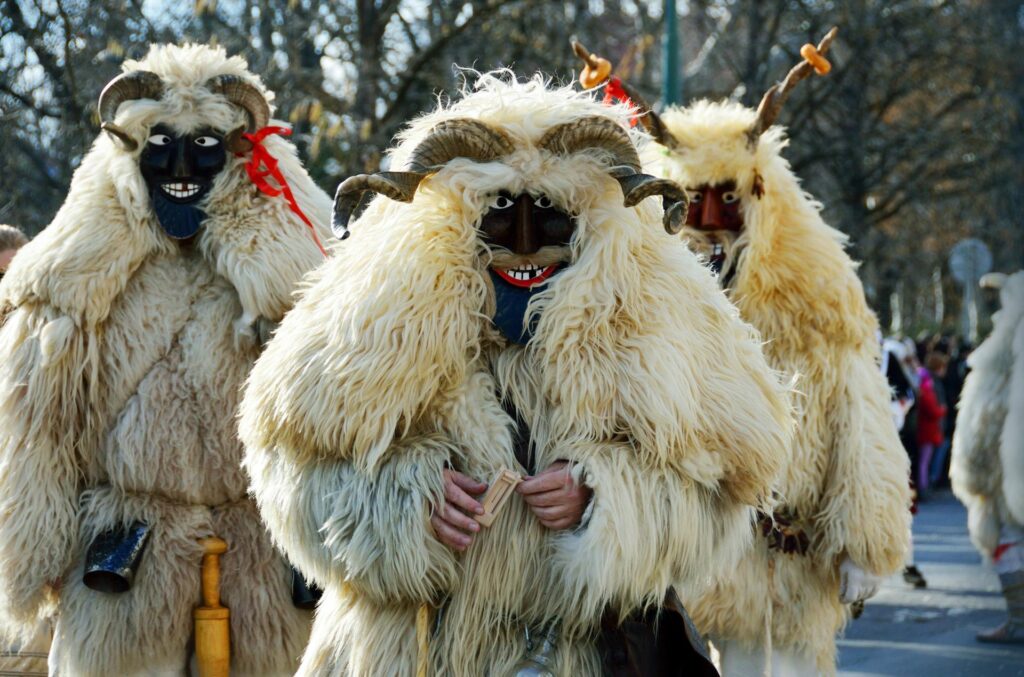
In Southern Hungary, the arrival of Spring is marked with an unusual tradition in the town of Mohács. Participants dress in elaborate wooden masks and heavy wool costumes, transforming into scary figures known as busós.
The custom dates back centuries and is believed to have originated as a way to chase away winter and evil spirits whilst also welcoming a prosperous year ahead. There is a loud bell, sticks, and eerie costumes, which are all part of the ritual, which creates a dramatic spectacle that’s intended to bring health, good fortune, and a rich harvest.
The celebrations include parades through the streets, music, dancing, traditional food and drink, and plenty of merriment. Today, the event attracts both locals and visitors from around the world, and is seen as one of Europe’s most unusual and visually striking traditions.
Smashing plates in Germany
Polterabend, coming from the German verb poltern, making a lot of noise, and abend, evening, is a unique tradition in Germany that is generally held the day before a bride and groom are due to wed.
It’s a big party where friends and family gather at the front of the house and smash things on the floor, such as plates, flowerpots, tiles – just about anything that makes a lot of noise. It’s thought to bring good luck, so glass and mirrors are avoided, as glass symbolises happiness, and shouldn’t be broken, and breaking mirrors is seen as bad luck.
Once the dish breaking is done, the bride and groom then work together to clean it up as preparation for the future.
Shoving faces in cake in Mexico
A particularly playful tradition is ‘La Mordida’, a Mexican birthday tradition. On their birthday, the celebrant will have their hands tied behind their back and when they go to take the first bite of cake, they will have their face pushed right into it whilst the rest of the party guests shout “Mordida! Mordida! Mordida!”, the Spanish word for ‘take a bite’. It’s particularly important to note here that Mexican cakes are pretty creamy, which can make quite a mess.
The tradition stems from ancient Aztec and Mayan cultures, which are known for incorporating elements of fun and mischief into their rituals and celebrations.
Battle of the oranges in Italy
Every year on the three days leading up to Mardi Gras, something rather strange takes place in Ivrea, Italy. The residents divide up into nine different squads and dress in battle attire, then over the next few days, they sling oranges at each other to try and kill the other teams. It has become the largest food fight in Italy, however, not quite as big as La Tomatina yet.
The origins of this game are unclear, but some believe it is linked to the city’s defiance against a tyrannical ruler in the 12th or 13th century. He assaulted a young girl on the evening of her wedding, but the girl decapitated him, sparking a revolution which saw the local people storm the palace and burning it down. Oranges weren’t used until the 19th Century – originally, beans were used to represent the stones thrown by the people. It’s not clear why oranges were used, as they are not native to this part of Italy and 100,000s of kilograms of the fruit have to be brought into the city for it.
Finger cutting of the Dani tribe
Everyone grieves differently after the loss of a loved one, but the women of the Dani tribe in Indonesia have quite a unique and severe way of dealing with grief.
When they lose a loved one, the top joint of a woman’s finger will be amputated, a practice known as ikipalin. String will be tightly tied around the finger until it goes numb and then a family member, often a sibling or parent, will cut off the top of the finger. The wound is then burnt to stop the bleeding and prevent infection.
The process is carried out to symbolise the pain suffered after the loss of a loved one and to keep the deceased person’s spirit away. In the Dani tribe, fingers symbolise unity and strength, with the fingers working together – missing fingers represent the loss felt by missing family members.
Naked festival in Japan
Every year in Konomiya, Japan, locals celebrate the Hadaka Matsuri, or “naked festival”, held on the 13th day of the lunar calendar (which usually falls in February or March) to welcome good luck for the new year. Thousands of men attend wearing only a loincloth and compete to grab sacred sticks called Shingie that are thrown into the crowd by priests. The person who catches the stick is said to receive blessings for prosperity and health. In 2024, women took part for the first time.
The exact origins are unclear – some trace it back about 1,250 years as a way of combatting plague and pestilence, whilst others link it to ancient Shinto purification rituals which were believed to cleanse the participants of evil spirits and bad luck for the coming year. Over time, the practice evolved into a fun and playful communal festival.