Healthcare and Health Insurance in the Netherlands
Our expat guide to the healthcare system and health insurance in the Netherlands
The Netherlands is one of the most popular destinations in Europe for expatriates, offering an enviable quality of life, excellent transport links, a thriving international job market, and a high level of English fluency. Its healthcare system is regularly ranked among the very best on the continent, combining universal access with consistently strong patient outcomes and a reputation for innovation.
Healthcare in the Netherlands works differently from many other countries, rather than a tax-funded public service or a clear public-versus-private divide, the Dutch system is built on mandatory health insurance, with care delivered by private, mostly not-for-profit providers under tight government regulation – a single, high-quality system that everyone pays into and everyone can use.
If you are moving to the Netherlands for work, study, retirement, or simply a change of scenery, understanding how the system works and arranging the right health insurance Netherlands residents rely on will help you settle in with confidence.
Public healthcare in the Netherlands
The Netherlands public health system is vastly different than in countries with a sharply divided public and private system. In the Netherlands, the government defines the standard package of care and regulates the market closely, but the insurance itself is provided by private companies. Around 30 insurers offer the same legally defined basic package, so the cover is identical wherever you buy it – only the price, service, and optional extras differ. This sits alongside a strong tradition of Netherlands public health, with high vaccination rates and effective preventive care. The system is funded through the premiums you pay your insurer plus an income-related contribution deducted from your salary, and long-term care is funded separately through a national scheme (the Wlz).
At the heart of the system is your GP, known in Dutch as the huisarts, who is your first point of contact for almost every health concern and acts as the gatekeeper to specialist and hospital care. You generally cannot see a specialist or attend a hospital outpatient clinic without a GP referral first. This keeps the system efficient, but it can feel unfamiliar if you are used to booking specialists directly, and waiting times for non-urgent appointments can be longer than expats expect.
Is healthcare free in the Netherlands?
No, healthcare is not free in the Netherlands, but it is universal. Every resident is legally required to take out basic health insurance, and in return gains access to a comprehensive standard of care. The system is heavily regulated to keep it fair and insurers must accept every applicant for the basic package regardless of age or health, and cannot charge different people different prices for the same policy.
The basic insurance (basisverzekering) covers GP visits, hospital and specialist care, prescription medicines on the approved list, maternity care, and most mental health services. As of 2026, the average monthly premium for basic cover is €159.30, though cheaper policies are available. On top of the premium, adults pay a mandatory annual deductible (eigen risico) of €385 – the first portion of medical costs you cover yourself each year before your insurer steps in. GP visits and maternity care are exempt, and children under 18 pay nothing.
You can choose to raise your deductible voluntarily by up to €500 (to a maximum of €885) in exchange for a lower monthly premium, though this means paying more out of pocket if you do need care.
Lower-income residents can apply for a healthcare allowance (zorgtoeslag) to help offset premiums. For expats whose residency status is not yet finalised, or who travel frequently, international health insurance is often the more flexible route – and crucially, it provides cover immediately rather than waiting for Dutch eligibility to be confirmed.
Private healthcare in the Netherlands
As all private healthcare is delivered by private providers and funded through mandatory insurance, there is no separate, parallel private hospital network for those willing to pay more. Instead, the entire system operates to a high standard, and your policy determines which providers you can access.
The key distinction lies in the type of policy you hold.
- A restitution policy (restitutiepolis): lets you choose any doctor or hospital, including those without a contract with your insurer, paying upfront and claiming the cost back.
- A benefits-in-kind policy (naturapolis): is usually cheaper but restricts you to providers your insurer has contracts with.
- Budget policies may contract only a limited number of hospitals, so check the provider network before you commit – especially if you have a preferred hospital or specialist in mind.
While the basic package is comprehensive, it does not cover everything. Adult dental care, physiotherapy beyond a limited allowance, glasses and contact lenses, and most alternative therapies fall outside it. For this reason, supplementary insurance (aanvullende verzekering) is common – in 2025, more than 80% of the Dutch population held some form of top-up cover. Unlike the basic package, insurers are not obliged to accept you for supplementary cover, and waiting periods or medical assessments may apply.al care, physiotherapy beyond a limited allowance, glasses and contact lenses, and most alternative therapies fall outside it. For this reason, supplementary insurance (aanvullende verzekering) is common – in 2025, more than 80% of the Dutch population held some form of top-up cover. Unlike the basic package, insurers are not obliged to accept you for supplementary cover, and waiting periods or medical assessments may apply.
Expat health insurance Netherlands
Unlike in many countries, health insurance in the Netherlands is a legal requirement. If you live or work in the country, you must take out at least basic Dutch health insurance, generally within four months of registering with your local municipality and receiving your citizen service number (BSN). Failing to do so can result in fines, and cover is backdated to your registration date.
As a foreigner, your options depend on your circumstances. The first is Dutch basic insurance from a local insurer such as Zilveren Kruis, CZ, or VGZ. This gives you the full standard package, but it only covers you within the Netherlands – a limitation if you travel often or plan to relocate again – and you cannot apply until your residence permit is finalised, which can leave a gap on arrival.
This is where international health insurance is valuable. An international policy travels with you across borders, covers you both in the Netherlands and elsewhere, and is available from the moment you arrive – bridging the gap before you become eligible for Dutch cover, and giving you continuity if your plans change. Arranging the right international health insurance Netherlands cover early avoids any gap in protection. If you have relocated for work, your employer may arrange or contribute towards your insurance, so check what is included before arranging your own.
Pharmacies and medication

Prescription medicines in the Netherlands are dispensed only by a pharmacy, known as an apotheek. There are over 1,900 pharmacies across the country, so you are rarely far from one. The apotheek is distinct from a drogist (drugstore) such as Kruidvat or Etos, which sells only non-prescription items, toiletries, and cosmetics.
It is a good idea to register with a local pharmacy near your GP when you arrive, which makes filling prescriptions quicker and allows records to be shared securely between your doctor and pharmacist. Most pharmacies open during standard weekday business hours and bill your insurer directly, and every major city has at least one 24-hour pharmacy, often within a hospital.
For expats, unlike many destinations, a prescription issued in another EU country is generally valid in the Netherlands and can be filled at a Dutch apotheek. Be aware that some medicines available over the counter in your home country may require a prescription here. Medicines are heavily subsidised and personal contributions are capped, so out-of-pocket costs stay low.
Hospitals

Public vs private hospitals
The Netherlands does not have the public-versus-private hospital divide found in many countries. Because all hospital care is funded through mandatory insurance and delivered by private, mostly not-for-profit institutions, there is no separate, fee-paying private tier sitting above a public one. In 2025, 69 hospital organisations operated a total of 113 hospitals across the country, alongside a number of specialist centres and 137 outpatient clinics, all working to a high standard.
Dutch hospitals fall into three broad categories: academic hospitals – the eight university medical centres (UMCs) affiliated with major universities – which handle the most complex treatment and lead medical research; teaching hospitals, which train staff and offer specialist treatments; and general hospitals for everyday care. The government increasingly encourages hospitals to specialise, so services can vary between locations.
Quality of hospitals
The standard of care across Dutch hospitals is consistently high. The system is noted for strong patient rights, efficient outpatient and day-surgery provision, and a high ratio of nursing staff relative to the European average.
The Dutch system has a comparatively low number of hospital beds per head, well below the EU average. This is a deliberate feature for strict GP gatekeeping, a high rate of day surgery, and excellent outpatient and home care mean fewer people need lengthy hospital stays.
English-speaking staff and hospitals in the Netherlands
The Netherlands consistently ranks among the most proficient English-speaking nations in the world, and this extends to its healthcare system. Doctors, nurses, and hospital staff in major cities almost always speak excellent English, making the Netherlands one of the easier destinations for English-speaking expats to navigate. English remains widely spoken outside the larger cities too, and many GP practices and online directories can help you find an English-speaking huisarts.
Hospitals in the Netherlands
Major cities are well served by leading hospitals across the academic, teaching, and general categories. Well-regarded facilities include:
In Rotterdam
- Erasmus MC (one of the country’s largest and highest-ranked university medical centres)
In Amsterdam
- Amsterdam UMC
- The Netherlands Cancer Institute (Antoni van Leeuwenhoek), a specialist oncology centre
In Utrecht
- UMC Utrecht
In Groningen
- University Medical Centre Groningen (UMCG)
Services offered by hospitals
Across Dutch hospitals you will find a comprehensive range of services including emergency care, surgery, specialist consultations, maternity services, oncology, cardiology, intensive care, rehabilitation, and diagnostic imaging. The academic centres add highly specialised services such as neurosurgery, complex paediatric care, and infectious disease treatment. There is a strong emphasis on outpatient and day-treatment care, with much routine surgery now performed without an overnight stay.
Admission process for hospitals
For non-emergency hospital treatment, you will usually need a referral from your GP – the huisarts gatekeeping system applies to hospital and specialist care alike. Elective procedures involve a pre-admission process, while emergency care is available to anyone at any time. Proof of insurance will be requested as part of admission.
Costs of hospitals in the Netherlands
Because care is funded through insurance, you will not typically face large upfront hospital bills as you might in a fee-paying private system. Hospital and specialist care counts towards your annual deductible (eigen risico) of €385 in 2026, after which your insurer covers treatment within your policy terms.
Facilities of hospitals in the Netherlands
Dutch hospitals offer a high standard of comfort, with modern facilities and a strong focus on patient experience. Shared and single rooms are common, and some hospitals offer private rooms, though the system is less oriented towards luxury suites than fee-paying private sectors elsewhere. The emphasis is firmly on clinical quality, efficiency, and patient rights.
Insurance acceptance
Hospitals will check your insurance details as part of admission, and in most cases bill your insurer directly. If you hold a benefits-in-kind policy, confirm in advance that your chosen hospital is within your insurer’s network to avoid unexpected costs. If you hold international insurance, confirm your provider’s direct-billing arrangements and network hospitals ahead of time, and always carry your insurance documentation with you.ur insurer directly. If you hold a benefits-in-kind policy, confirm in advance that your chosen hospital is within your insurer’s network to avoid unexpected costs. If you hold international insurance, confirm your provider’s direct-billing arrangements and network hospitals ahead of time, and always carry your insurance documentation with you.
Emergency services
In a life-threatening emergency, dial 112 – the free pan-European number that connects you to ambulance, police, and fire services, available 24 hours a day with English-speaking operators. The national standard requires ambulances to reach emergencies within 15 minutes of the call being received. In larger cities response times are often faster, though in rural areas this target is not always met.
For urgent but non-life-threatening problems, the approach differs from many countries. During the day, call your GP first. Outside office hours – evenings, nights, and weekends – contact the out-of-hours GP service, the huisartsenpost, usually located near or within a hospital. Staff will assess you over the phone and either give you an appointment, arrange a home visit, or direct you to the hospital emergency department (spoedeisende hulp, or SEH). Going straight to A&E for something a GP could handle is discouraged, as it leads to long waits.
Ambulance transport is not free. The national base tariff set by the Dutch Healthcare Authority is €979.82 for an emergency journey, plus a loaded transport kilometre rate of €5.60 per kilometre, so a typical ride comes to over €1,000 or more depending on distance, and it counts towards your deductible. Confirming that your insurance covers emergency transport before you need it is always sensible.
Vaccinations
The Netherlands has a high standard of public health and no unusual vaccination requirements for everyday life. Before relocating, check that your routine vaccinations are up to date – including measles, mumps and rubella (MMR), diphtheria, tetanus and pertussis (DTP), and an up-to-date COVID-19 vaccination. Speak to your GP or a travel health specialist for advice tailored to your circumstances, particularly if you will be travelling onwards from the Netherlands.
Common health risks
The Netherlands is a safe and healthy place to live, with no significant tropical disease risks, safe tap water nationwide, and excellent food safety standards. There are, however, a few everyday considerations worth bearing in mind.
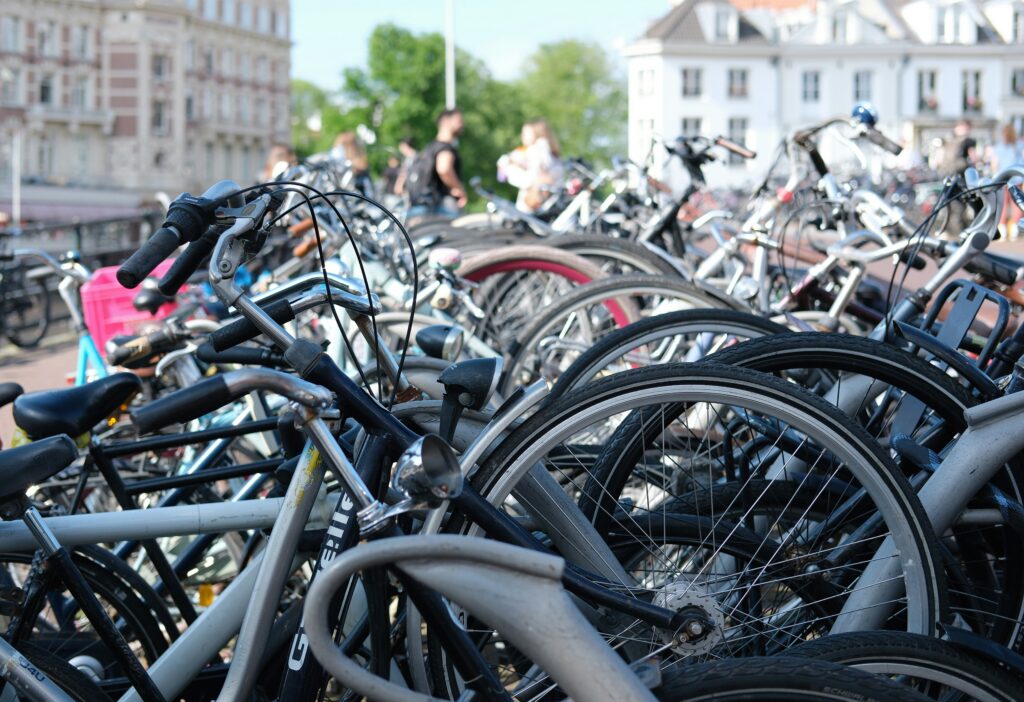
The famously flat, cycle-friendly landscape means most residents cycle daily, so road awareness as a cyclist, pedestrian, and driver around the extensive bike lanes is important.
The Dutch climate is mild but often wet and grey, and some newcomers find the long, dark winters affect their mood, so looking after your mental wellbeing matters.
Tick-borne Lyme disease is present in wooded and grassy areas, so taking sensible precautions when walking in nature is wise.
Tips for staying healthy in the Netherlands
Settling into life in the Netherlands is straightforward, and a little preparation goes a long way.
Register early: Sort your BSN, GP, and pharmacy registration soon after you arrive so you are ready when you need care.
Know your GP route: Remember that the huisarts is your gateway to almost all care – build a good relationship with your practice.
Cycle safely: Wear lights after dark, follow the cycle lanes, and stay alert around the country’s busy bike infrastructure.
Mind the winter: Stay active and make the most of daylight to counter the effects of the darker months.
Useful resources
- Government of the Netherlands – health insurance: https://www.government.nl/topics/health-insurance
- Dutch Healthcare Authority (NZa): https://www.nza.nl/english
- National Health Care Institute (Zorginstituut Nederland): https://english.zorginstituutnederland.nl
- Find a GP or provider (ZorgkaartNederland): https://www.zorgkaartnederland.nl
- Medicine information (KNMP / Apotheek.nl): https://www.apotheek.nl
- Emergency services: 112
Disclaimer
Informational purposes only
The content in this guide is for general informational and educational purposes only. It does not constitute legal, financial, tax, or medical advice.
Accuracy and currency
Regulations and laws change frequently. While we strive for accuracy, we make no guarantees that this information is complete, accurate, or up to date.
No reliance & professional advice
Do not rely on this guide as a substitute for professional advice. Always verify requirements directly with official government sources or qualified advisors before making decisions.
Limitation of liability
To the maximum extent permitted by law, Expatriate Group accepts no liability for any loss, damage, or errors arising from reliance on this information.