The Retirement Abroad Index 2026: The Top Ranked Countries to Retire
Retiring abroad is no longer a niche option. Due to rising living costs at home, improving global healthcare infrastructure, and dedicated retirement visa programmes, overseas retirement is now a realistic and achievable option for millions of people planning their next chapter.
To identify the world’s most retiree-friendly destinations, Expatriate Group has produced the Retirement Abroad Index 2026, ranking 20 countries across five factors: healthcare quality, visa accessibility, health insurance requirements, cost of living, and expat community and integration. Each country received a score out of 100 based on publicly available data and retirement-specific criteria. Our full methodology can be viewed at the bottom of this page.
The Philippines ranks first in our Retirement Abroad Index, achieving a score of 78 out of 100. The country performs strongly for affordability and visa accessibility, and its strong private healthcare sector offers reassurance for retirees. Thailand follows closely in second place with a score of 77, driven by the joint-highest healthcare score in the index. Colombia takes third place with a score of 73, combining low living costs with one of the most accessible retirement visa pathways.
Below, we reveal the full Retirement Abroad Index 2026, explain the methodology behind the rankings, and examine what prospective retirees need to know about healthcare and international health insurance before making the move overseas.
How we ranked the countries to retire
The Retirement Abroad Index 2026 aims to evaluate the factors that matter most when relocating overseas in later life. Rather than focusing solely on lifestyle considerations, the index assesses the practical realities retirees face, including healthcare access, visa requirements, living costs, and the ease of settling into a new country.
Each country was scored across five equally weighted pillars. Every pillar was worth up to 20 points, creating a maximum possible score of 100. The countries were then ranked according to their combined score. For the full methodology, see the bottom of the page.


Retirement Abroad Index: Countries Ranked
The 20 countries in this index span four continents, nine time zones, and a wide range of climates, cultures, and costs. Whilst they differ significantly in character, they share the qualities that matter most to prospective retirees: accessible visa pathways, reliable healthcare, manageable living expenses, and established expat communities.
The top six countries are explored in detail below, followed by the full ranking.
1st Philippines

The Philippines ranks as the top country in our index to retire, with a winning overall score of 78 out of 100. Its success is driven by exceptional visa accessibility, low living costs, and one of the strongest expat integration scores in the index.
The country’s Special Resident Retiree’s Visa (SRRV) is among the most accessible retirement programmes we assessed. Applicants aged 50 and over who receive a qualifying pension can access this visa with a fixed deposit of $15,000 USD (around £11,000), and successful applicants benefit from long-term residency without the burden of annual visa renewals. Processing times typically range from four to eight weeks.
Healthcare receives a medium-range score of 12 out of 20, which reflects a significant gap between urban and rural provision. The major cities such as Manila and Cebu City offer access to modern private hospitals, internationally accredited facilities, and English-speaking medical professionals. However, healthcare standards can vary considerably outside of these urban centres. For example, public hospitals in more remote provinces are often under-resourced, with fewer specialists and longer waits for major procedures. So, location is an important consideration for retirees.
Affordability remains one of the country’s biggest strengths. On average, a retired couple can typically live comfortably on around £750 – £1,000 per month, although costs are generally higher in Manila than in the smaller cities and coastal communities. English is widely spoken and is one of the country’s official languages, which removes a common barrier to integration for UK retirees. Combined with a well-established expat population across Manila, Cebu, and popular island destinations, this makes the transition to life overseas much easier than in many competing retirement destinations.
For retirees who are looking for an affordable lifestyle, a straightforward visa pathway, and a large English-speaking community, the Philippines offers one of the most compelling overall retirement packages in the world. The key is to ensure your health insurance is robust enough to bridge the gap between excellent urban healthcare and more limited provision elsewhere. In practice, that means checking your policy covers medical evacuation to Manila or Cebu (or repatriation) from more remote provinces.
2nd Thailand

Thailand ranks second in our Retirement Abroad Index 2026, with an overall score of 77 out of 100. It has the joint-highest healthcare score in the ranking, alongside competitive living costs and a well-established retirement infrastructure which contribute to its high ranking.
The Non-Immigrant O-A Visa is the standard retirement route, which requires proof of funds of 800,000 Thai Baht (approximately £18,000) held in a Thai bank account, or a monthly income of 65,000 Baht (around £1,480). The visa is valid for one year and requires annual renewal, and crucially, health insurance is a mandatory condition – applicants must demonstrate cover of at least $100,000 (approximately £74,000) per policy per year.
Thailand’s healthcare system is one of its greatest strengths. Scoring 18 out of 20, the country offers access to internationally recognised private hospitals, particularly in Bangkok, Chiang Mai, and Phuket; these facilities are renowned for high clinical standards. Although healthcare quality can be less consistent in rural areas, retirees based in the country’s main cities have access to some of the best private healthcare in Asia. In addition, clinical standards in the public system are generally solid, especially at major public hospitals in Bangkok, but facilities are often more basic and the quality is less consistent in rural provinces.
Living costs remain relatively low by international standards. A retired couple can typically live comfortably on around £1,000 to £2,000 per month, depending on lifestyle and location, with Bangkok generally sitting at the higher end of the range.
Where Thailand scores less well is on expat community and integration, finishing with just 8 out of 20 on that pillar. English functionality outside tourist and expat areas is limited, and InterNations data places Thailand lower on ease of settling in than its headline popularity might suggest. For retirees who plan to base themselves in established expat areas in Thailand, this is manageable; for those who want a more immersive or remote lifestyle, it warrants careful consideration.
3rd Colombia

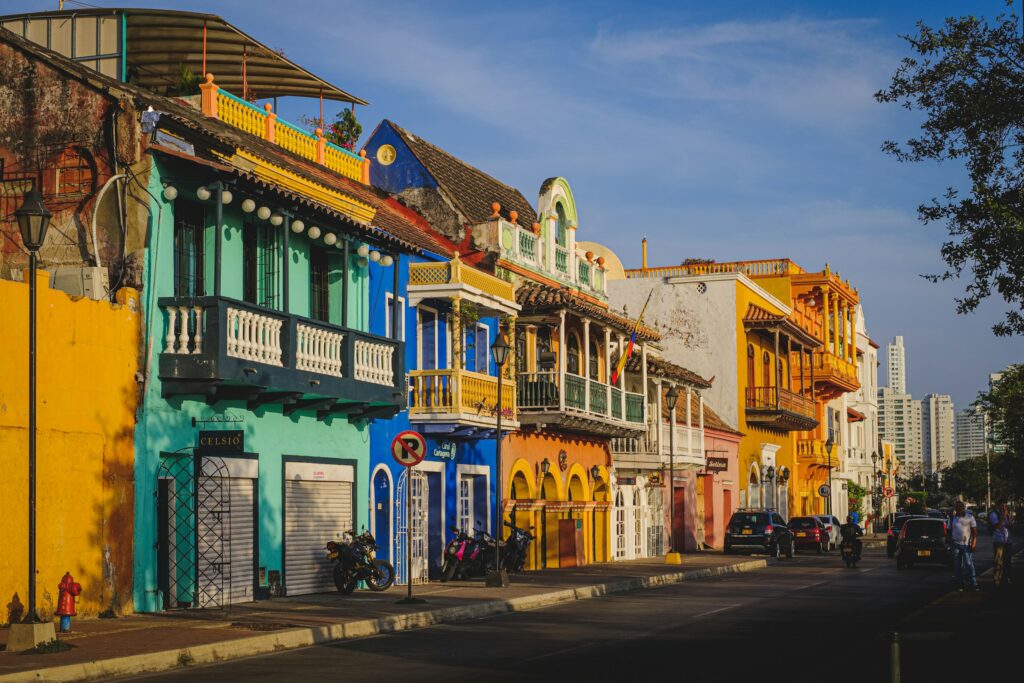
Colombia ranks third on our Retirement Abroad Index, with a score of 73 out of 100. Combining an accessible retirement visa, low living costs, and improving healthcare infrastructure, it has emerged as one of the most attractive retirement destinations in Latin America. The Pensionado Visa requires a minimum monthly pension income of around £1,100, which makes it extremely accessible for many retirees.
Healthcare scores 12 out of 20. Major cities such as Medellín and Bogotá both have strong private hospital networks, and medical costs are significantly lower than in Europe or North America for comparable treatment. However, healthcare provision does become less consistent outside the main urban centres and in the public system, so choosing where to live is an important consideration. The cost of living is one of Colombia’s strongest assets, scoring 18 out of 20. A retired couple can typically live comfortably on around £1,000 to £1,500 per month, with Medellín consistently cited by expats as offering exceptional value.
A considerable challenge for UK retirees in Colombia is often the language. English is not widely spoken outside expat areas, and day-to-day life can be more demanding for those who don’t have Spanish language skills. Although the expat community is growing rapidly, especially in Medellín, and Colombia scores a respectable 12 out of 20 for integration, even a basic level of Spanish can make a big difference to quality of life.
4th Portugal

Portugal ranks fourth with 71 out of 100 and is the highest-ranked European retirement destination in the index. The D7 Passive Income Visa is the main route for retirees, requiring a minimum monthly income of approximately €920 (around £730), which is linked to Portuguese minimum wage. Processing times have historically been slow, running up to six months in some cases, but there have been recent administrative reforms to reduce the backlogs.
Healthcare for Portugal scores 16 out of 20, which reflects a strong private healthcare sector alongside a capable public system. A couple can expect to live comfortably on around £2,000 to £3,000 per month in Lisbon or Porto, with significantly lower costs in the Algarve and rural regions. Portugal scores 15 out of 20 for expat community and integration, thanks to high levels of English proficiency, a welcoming culture, and strong ease-of-settling-in scores.
=5th South Africa

South Africa ranks joint-fifth on the retirement abroad index, with a score of 69 out of 100. Its strongest performances come in affordability and health insurance accessibility, supported by a relatively straightforward retirement visa pathway. The Retired Person Visa requires a minimum monthly income of 37,000 South African Rand (approximately £1,680). The visa is valid for four years, renewable, and can lead to permanent residency after five years.
Healthcare scores 10 out of 20. The private hospital networks in Cape Town, Johannesburg, and other major cities are of a high standard, but the public healthcare system is generally not considered a viable option for foreign retirees. A retired couple can typically live comfortably on between £1,100 and £2,000 per month, with Cape Town sitting at the upper end of that range.
English is one of the country’s official languages and is widely used in everyday life. This helps support an integration score of 10 out of 20 – solid rather than outstanding, but sufficient to make settling in relatively straightforward for most UK retirees.
=5th Sri Lanka

Sri Lanka shares a score of 69 out of 100 with South Africa, coming in joint fifth on our Retirement Abroad Index. It performs exceptionally well on affordability, and offers a dedicated retirement visa. Under the Sri Lanka Retirement Resident Guest Scheme, applicants must demonstrate a minimum monthly income of around £1,200 per month, or a fixed deposit of around £12,000, and processing is typically completed within a matter of weeks.
Healthcare scores 14 out of 20, which reflects the competent private healthcare sector in Colombo and a handful of other urban centres, but more limited provision elsewhere and throughout the public system.
Affordability is one of Sri Lanka’s standout strengths. A retired couple can typically live comfortably on between £500 – £1,000 per month, making it one of the lowest-cost destinations in the ranking. The integration picture is more nuanced; English is widely spoken in Colombo and tourist areas, but the expat community is relatively small compared to more established destinations. However, for retirees who prioritise affordability and a less-trodden path over a ready-made expat infrastructure, it remains an attractive option.
How the rest of the index ranks
The following 14 destinations each offer a distinct combination of strengths and trade-offs. None reached the overall scores of the top six, but many perform exceptionally well on individual pillars, and for the right retiree, any one of them could be the strongest personal fit. Click on each country for more details.



The top 20 countries to retire abroad
| Rank | Country | Overall Score | Healthcare Quality | Visa Accessibility | Health Insurance Requirement | Cost of Living | Expat Community & Integration |
|---|---|---|---|---|---|---|---|
| 1 | Philippines | 78 | 12 | 17 | 15 | 18 | 16 |
| 2 | Thailand | 77 | 18 | 15 | 20 | 16 | 8 |
| 3 | Colombia | 73 | 12 | 16 | 15 | 18 | 12 |
| 4 | Portugal | 71 | 16 | 13 | 15 | 12 | 15 |
| 5 | Sri Lanka | 69 | 14 | 15 | 15 | 18 | 7 |
| 6 | South Africa | 69 | 10 | 15 | 18 | 16 | 10 |
| 7 | Malaysia | 68 | 14 | 7 | 18 | 18 | 11 |
| 8 | Dubai (UAE) | 68 | 14 | 12 | 20 | 8 | 14 |
| 9 | Mexico | 66 | 16 | 10 | 16 | 14 | 10 |
| 10 | Spain | 64 | 18 | 11 | 15 | 10 | 10 |
| 11 | Indonesia | 64 | 8 | 13 | 14 | 20 | 9 |
| 12 | Panama | 63 | 8 | 15 | 18 | 12 | 10 |
| 13 | Qatar | 62 | 16 | 6 | 18 | 10 | 12 |
| 14 | France | 60 | 18 | 16 | 14 | 4 | 8 |
| 15 | Costa Rica | 59 | 10 | 14 | 14 | 10 | 11 |
| 16 | New Zealand | 58 | 12 | 9 | 17 | 6 | 14 |
| 17 | Greece | 53 | 6 | 10 | 14 | 10 | 13 |
| 18 | Italy | 51 | 10 | 13 | 14 | 6 | 8 |
| 19 | Cyprus | 51 | 4 | 11 | 13 | 8 | 15 |
| 20 | Malta | 48 | 2 | 8 | 13 | 8 | 17 |
The importance of healthcare in retirement abroad

The countries in this index offer very different healthcare experiences, ranging from world-class private hospital networks in destinations such as Spain and Qatar to systems where high-quality care is concentrated in a handful of major cities. Yet one finding is consistent across every country ranked: retirees should not assume that public healthcare alone will meet their needs.
In some destinations, access to public healthcare is restricted by visa status or residency requirements. In others, public services are available in theory but can present practical challenges for foreign retirees, including long waiting times, language barriers, limited specialist access, or significant regional variations in quality. As a result, private healthcare often becomes the preferred, and sometimes only realistic, option.
Even where health insurance is not a formal visa requirement, going without adequate cover can carry substantial financial risk. A medical evacuation from a remote area can cost tens of thousands of pounds, and treatment for a serious illness or unexpected hospitalisation can quickly generate extremely high bills.
When selecting international health insurance for retirees, the policy details matter as much as the premium. Cover should include inpatient and outpatient treatment, medical evacuation and repatriation, and access to the private hospital network in your country of residence. Pre-existing condition terms, age-related premium increases, and the geographic scope of the policy, including whether it covers treatment in your home country during visits, are all worth scrutinising carefully before you commit. You can read more in our guide to international health insurance after 55.
Making the right retirement decision for you
The Retirement Abroad Index 2026 is built on data, but the right retirement destination is ultimately a personal decision. A retiree who prioritises affordable living and visa simplicity will weight the index differently from one whose primary concern is healthcare access or proximity to an established English-speaking community. The data gives you a starting point, but your own priorities will determine the destination.
What the index does make clear is that some widely held assumptions about retirement abroad require scrutiny. European destinations, despite their cultural familiarity and geographic proximity for many retirees, rank in the bottom half of the index across the board, constrained by cost of living, visa complexity, and in some cases, healthcare limitations that their reputations do not suggest. Meanwhile, destinations in Southeast Asia and Latin America often offer affordability, visa accessibility, and private healthcare quality that make for a compelling case.
The one constant across every destination in this index is the importance of appropriate health insurance cover. Visa requirements and the gap between public and private provision vary significantly from country to country, but in nearly every destination ranked here, opting for international health insurance is the sensible choice.
If you are at the stage of planning your retirement abroad, the next step is to understand what international health insurance cover would look like for your destination of choice and your personal health profile.



Methodology and sources
Countries were selected and compared based on the factors that often impact quality of life abroad: affordability, visa accessibility, community, healthcare, and health insurance requirements. Each pillar received an equally weighted score based on data collected in 2026.
Healthcare quality was measured using the Numbeo Healthcare Index 2026 and converted into a banded score. Visa accessibility was assessed using four retirement-specific criteria: minimum income requirements, application processing times, the complexity of visa conditions, and the availability of a dedicated retirement visa programme. Health insurance requirements were evaluated based on whether insurance is a mandatory requirement for the visa and the mandated coverage level.
Cost of living scores were based on the Numbeo Cost of Living Index 2026, with lower living costs receiving higher scores. Expat community and integration combined data from UN DESA 2024 international migrant population estimates, the EF English Proficiency Index 2025, and the InterNations Expat Insider 2025 Ease of Settling In rankings to assess how welcoming and accessible each destination is for UK retirees.
| Pillar | What it measures | Primary data source |
| Healthcare Quality | Quality and accessibility of healthcare services | Numbeo Healthcare Index 2026 |
| Visa Accessibility | Retirement visa availability, income thresholds, processing times, and application complexity | Immigration sources |
| Health Insurance Requirements | Accessibility and practicality of international private health insurance | Government visa requirements and insurer guidance |
| Cost of Living | Relative affordability of everyday living expenses | Numbeo Cost of Living Index 2026 |
| Expat community and integration | Ease of settling in, language accessibility, and expat population strength | UN DESA 2024, EF EPI 2025, InterNations Expat Insider 2025 |