Health Insurance Colombia
Our expat guide to the healthcare system and health insurance in Colombia

The Colombian healthcare system is widely regarded and respected. Despite the issues it has faced in 2024/25, it ranks 34th on the Numbeo Global Healthcare Rankings. This puts it above Sweden, the USA and many other countries notable for great healthcare standards.
The healthcare offering in Colombia is a mix of public and private services, with many facilities within the private sector internationally recognised for their high standards. Healthcare in Colombia is considered affordable when compared to many Western countries, with the private sector being favoured by many medical tourists for its affordability and range of services.
For expats living in or planning on moving to Colombia, it’s essential to understand the structure of the system, its costs, drawbacks and eligibility criteria. This guide outlines all aspects of healthcare in Colombia so that expats make informed decisions at every step.
Public healthcare in Colombia
The public healthcare system of Colombia is designed to ensure coverage for residents is as broad as possible. Expats can benefit from the public healthcare system in Colombia, subject to residency and employment status. Those with legal residency or working in Colombia are eligible; however, those on tourist visas are not. In many cases, expats opt for international health insurance to complement their public coverage as it grants access to the private system and a wider range of services.
The quality of care in the public sector is generally good, especially in urban areas. Patients have access to a wide range of services and highly trained staff. In contrast, rural areas often struggle to provide suitable care with outdated equipment, a lack of staff and chronic underfunding. Care is heavily subsidised with a tiered co-pay system in place, although those on low incomes will receive free care.
To register for public health insurance, known as EPS (Entidades Promotoras de Salud), you must be a resident of Colombia and hold a cédula (identity card). Once you have resident status, you apply for EPS insurance by choosing one of the various intermediaries, like SURA or Coomeva. Coverage then begins as soon as you are registered, with just the presentation of your ID card required at any medical facility. If you are working in Colombia, your employer enrols you automatically with deductions from wages to contribute towards your coverage.
Expats can face challenges in Colombia. Language barriers often prove difficult to overcome, and many public facilities have been struggling with drug availability and heightened levels of bureaucracy. As of 2024/25, public insurers and parts of the public system have been under severe financial strain, leading to lapses in standards. This has seen many expats choose private care.
Does Colombia have free healthcare?

Healthcare in Colombia is not strictly free, but it is heavily subsidised. Residents fall into two categories.
EPS- Contributory system
For expats working in Colombia, contributions are deducted from wages each month to fund health insurance contributions. This is normally set at 12.5% of the gross income. Expats not working, such as retirees, can voluntarily contribute to the system. In addition to these monthly payments, co-payments also apply for treatments & consultations, but they are relatively small. There are three different levels, each based on individual earnings.
EPS-Subsidised regime
For Colombian residents identified by SISBEN as being on low incomes or receiving government help, healthcare is extremely low-cost, and in some cases, free. No monthly contributions are required, and primary care, vaccinations and emergency care are normally free at the point of use. Co-pays are often as low as $1, but these are occasionally waived.
Private healthcare in Colombia
Private healthcare is the preferred option for most expats. With long wait times, concerns over drug availability and financial instability surrounding the public system, the private sector is seen as a welcome alternative. Reduced waiting times, higher levels of comfort, and more modern facilities mean expats benefit from enhanced care as soon as they need it.
The cost of private healthcare in Colombia is low by Western standards. A consultation can be much less than in the USA or Western Europe. Hospital stays and medication costs also show similar differences and are among the reasons people choose Colombia as a healthcare destination.
There are a host of globally recognised private hospitals in Colombia, with Hospital Universitario Fundación Santa Fe de Bogota, Fundación Cardioinfantil – Instituto de Cardiologia and Fundación Valle del Lili all accredited by the JCI.
Private health insurance is highly recommended for expats in Colombia. Despite working expats with residency being obliged to contribute to the public system, its inconsistent standards and current upheaval mean private care provides added security for those in need of treatment. Comprehensive cover minimises out-of-pocket expenses, and with an international plan, expats can remain safe in the knowledge they are covered in Colombia and abroad.


Health insurance in Colombia for expats
For expats with residency in Colombia, health insurance is mandatory. Every citizen must be enrolled in an EPS.
This means that all residents have access to the public system. With variable levels of care in some regions and concerns over funding, most expats choose a private health insurance plan to supplement their public healthcare contributions. This ensures access to a wider range of services and a higher standard of care.
An expat in Colombia has the option of a local plan, known as Medicina Prepagada, which offers private healthcare in Colombia only, or an international plan that provides broader coverage and allows patients to seek treatment abroad if required.
In both local and international plans, exclusions may apply. These often include pre-existing conditions, cosmetic surgery and some specialist services; however, they may vary per provider.
Premiums for private health insurance in Colombia can vary significantly. An insurer will consider age, income, type of coverage, and medical history before providing you with a quote. What should be noted is that all private health insurance plans require you to have an EPS as a base that you can then build upon with additional coverage.
Pharmacies and medication in Colombia

Pharmacies are available in most areas of Colombia, with national chains such as Cruz Verde and Farmatodo common. They are typically open seven days a week, with some providing a 24-hour service. Many medications found over the counter in other countries are also common in Colombia. Prescriptions are required for many treatments, and in the case of controlled substances and medication, only a Colombian prescription will be accepted.
The costs of medication in Colombian pharmacies are very low, with generic options up to 90% cheaper than brand-name equivalents. With EPS, prescriptions do require a small co-pay. Depending on the EPS you have, this comes with a charge, but the charge may vary per location and whether the treatment is on an approved list. Expats are advised to bring copies of prescriptions with them to ensure the correct medication is administered.
Hospitals in Colombia

Public vs private hospitals in Colombia
Colombia offers both public and private hospitals. Public hospitals can be found in towns, cities and more remote areas. Essential services are provided in most public hospitals, but the quality of care, wait times, and facilities can vary significantly across the country. Private facilities, on the other hand, are well-staffed, offer higher levels of care, a wider range of services, and can assist expats who find the language barrier a challenge.
Quality of hospitals in Colombia
Many hospitals, especially in places like Bogota, Medellin or Cali, are held in high regard in South America and across the globe. Multiple facilities hold JCI accreditation, and others frequently appear in Newsweek rankings of the best hospitals. Only recently, the Hospital Internacional de Colombia became the first hospital in Colombia and South America to join the renowned Mayo Clinic Care Network.
English-speaking staff in Colombian hospitals
Spanish is the primary language of Colombia. Expats may find language barriers in hospitals and clinics throughout the country. That being said, many private facilities have bilingual and multilingual staff to assist visitors from abroad. In some cases, interpreter services may be provided where necessary.
Leading hospitals in Colombia
Colombia is home to some of the most respected hospitals in the world. Fundación Santa Fe de Bogotá is well-known for its international collaborations and complex services, whilst Clinica Universidad de La Sabana in Chia is known for providing cutting-edge medical education and services. These are just two of many well-run, high-quality facilities that can be found in Colombia.
Services offered by hospitals in Colombia
Most public hospitals in Colombia offer a range of medical services, including emergency care, surgery, treatment for illnesses and maternity care. Some public hospitals may specialise in cardiology, oncology, orthopaedics or other areas of specialist care.
Private hospitals offer a far wider range of services and, in many cases, also have specialist departments for specific conditions such as diabetes, mental illness and rehabilitation.
In both types of hospital, emergency departments are available 24/7.
Hospital admission process in Colombia
The admissions process for hospitals in Colombia varies depending on whether you are using a private or public facility, and the reason for your visit. For emergencies, both hospitals will accept walk-ins with EPS or private insurance information collected after stabilisation. For scheduled or elective surgeries, a referral will be required from a GP or specialist.
Ambulance services are available, but response times can be slow in remote areas. With private facilities, ambulances can be provided by the hospital or an independent company. These offer a faster response and inter-hospital transfers but will incur out-of-pocket expenses or be billed through private insurance.
Costs for care in Colombian hospitals
Care in public hospitals is either free or heavily subsidised in Colombia, depending on what EPS status you hold. Despite this, issues with many EPS intermediaries are making access to care more difficult, making private healthcare a preferred option. The costs for private care are considerably cheaper than in many Western countries, making Colombia popular with health tourists. For example, an overnight stay in a good Colombian private hospital can cost approximately $300 per night compared to approximately $4,000 per night in the USA. A Surgery that may cost as much as $40,000 in the USA may only cost $7,000 in Colombia.
Facilities in Colombian hospitals
The facilities in Colombian public hospitals are good, but regional disparity is evident. Small regional hospitals are often cramped, lack equipment, are low on staff and cannot provide a broad range of services. In urban areas, public hospitals are significantly better but are facing increasing challenges. In contrast, private facilities provide a higher standard of care with private rooms, multilingual staff, hotel-like facilities and personalised services.
Health Insurance acceptance
Private health insurance will be accepted in most Colombian hospitals. If you hold an international health insurance plan, some hospitals, especially in large cities, will accept direct billing. Smaller facilities may request an upfront payment, with you claiming reimbursement after treatment.
Colombia emergency services
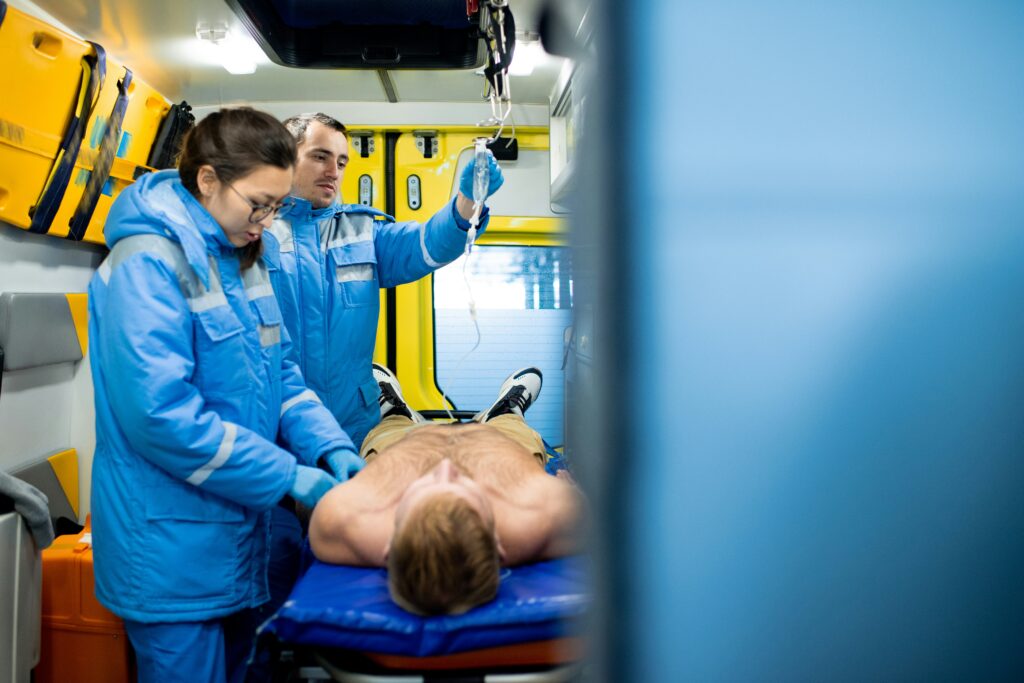
The emergency number in Colombia is 123. This is a national emergency line where the services will dispatch ambulances and coordinate with local hospitals. The call-outs are free for EPS members, but small charges will apply to those uninsured on the public system. Response times can be slow in rural areas due to higher demand for public services. Private ambulances, on the other hand, are generally more responsive but do come with a charge.
It is recommended that expats learn some Spanish phrases to help with emergency calls. ID, health insurance and medical records should also be easily accessible to enable a more seamless process.
Vaccinations in Colombia
Before leaving for Colombia, visitors should ensure their routine vaccinations (MMR, DTP, Polio, etc) are all up to date. In addition, Hepatitis A & B vaccinations are recommended. For expats planning to visit rural areas, Typhoid vaccinations are also advised. At the time of writing, Colombia has been experiencing a Yellow Fever outbreak, with a national health emergency declared. Therefore, this vaccination, whilst not always required, is highly recommended.
Aim to visit a GP around 6-8 weeks before travel to get the latest health advice and book the appropriate vaccinations.
Common health risks in Colombia
Colombia can present expats with a few health risks to contend with. Yellow Fever, Zika, Virus, Malaria, and Chikungunya are all present, although the risk of exposure varies greatly depending on where you visit. For optimal prevention, visits to high-risk areas should be limited, and appropriate measures such as using mosquito repellent, wearing suitable clothing and using mosquito nets are recommended.
Altitude sickness can also be common in Bogota, Narino and Antioquia, so measures should be taken to ascend and descend safely to prevent this.
Care should also be taken with drinking water and food. Whilst drinking water is safe in Bogota, standards elsewhere are not of the same level. As a result, to prevent traveller’s diarrhoea and other such illnesses, it is advised that expats only drink bottled water and only eat freshly cooked food.
Tips for staying healthy in Colombia

Colombia is a fantastic country to explore and enjoy. To get the best out of your time there, follow these tips:
- Stay hydrated. Warm weather in Colombia can lead to heatstroke and other issues if not sufficiently prepared. Drink bottled water to stay safe.
- Protect yourself from the sun. Remember hats, sunglasses, sunscreen, and avoid prolonged exposure to the sun.
- Be wary of altitude sickness. Some areas of Colombia are at a significant altitude. Take appropriate measures for a controlled ascent and descent.
- Keep a first aid kit at home and in the car.
- Register for EPS as soon as residency is granted.
- Learn Spanish phrases that may help in the event of an emergency.
- Stay up to date with vaccinations and check local and government advice.
Useful resources
- Emergency number for medical emergencies: 123
- Ministry of Health and Social Protection:https://www.minsalud.gov.co/English/Paginas/inicio.aspx
- Colombia expat forums for community advice:
Disclaimer
For informational purposes only
The content in this guide is for general informational and educational purposes only. It does not constitute legal, financial, tax, or medical advice.
Accuracy and currency
Regulations and laws change frequently. While we strive for accuracy, we make no guarantees that this information is complete, accurate, or up to date.
No reliance & professional advice
Do not rely on this guide as a substitute for professional advice. Always verify requirements directly with official government sources or qualified advisors before making decisions.
Limitation of liability
To the maximum extent permitted by law, Expatriate Group accepts no liability for any loss, damage, or errors arising from reliance on this information.